A gallery of very different
books
The house Victorian idiom is the press’s default, not its cage.
Nothing about a book’s subject, shape, or look is hardcoded: the trim,
the typography, the palette, the cover grammar, the front matter, the
reading measure, and the structure are all configuration a book
supplies. The strongest way to show that is to show it, so this gallery
is a set of complete example books that each produce a visibly different
object.
Every one is built by the same pipeline, with the
same command. The only thing that differs between them is the config in
their directory. They live under examples/
in the press repository, and each is proven a real press book on every
test run: its config passes the same typed model a live build demands,
the design surfaces genuinely vary across the set, and every one passes
the editorial law (press check).
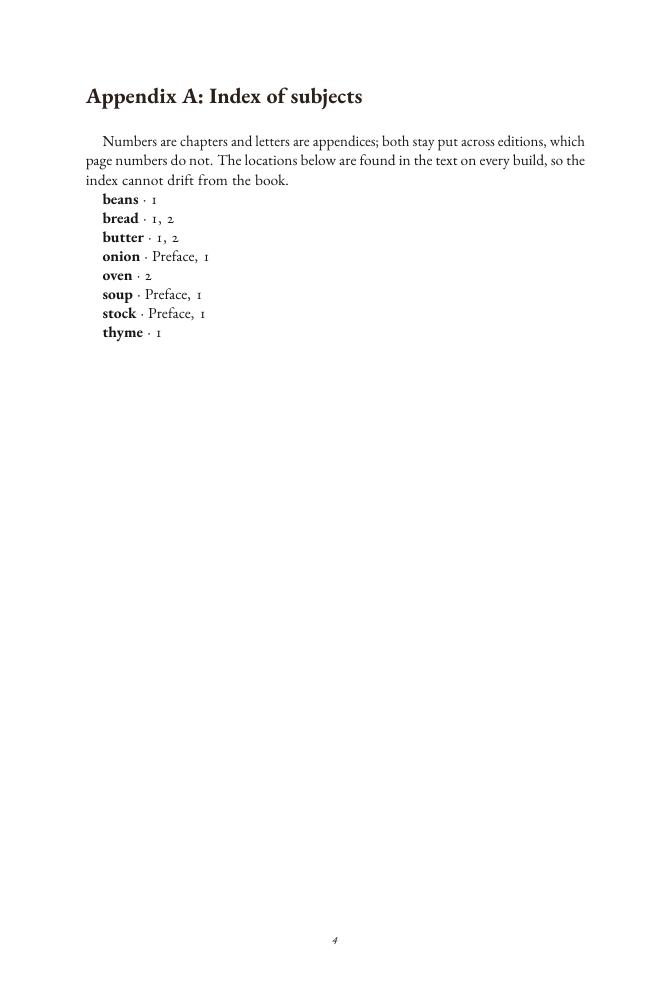
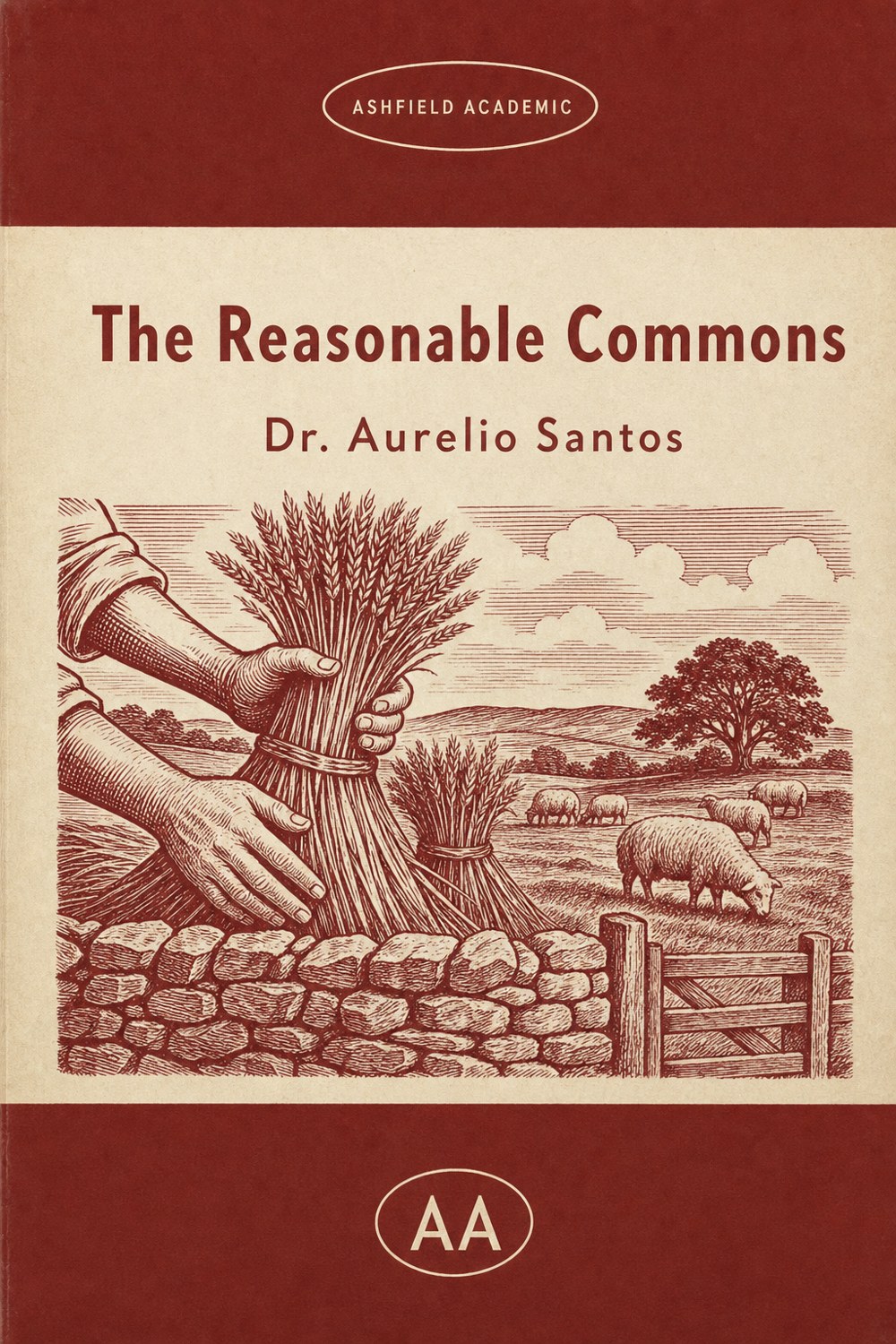
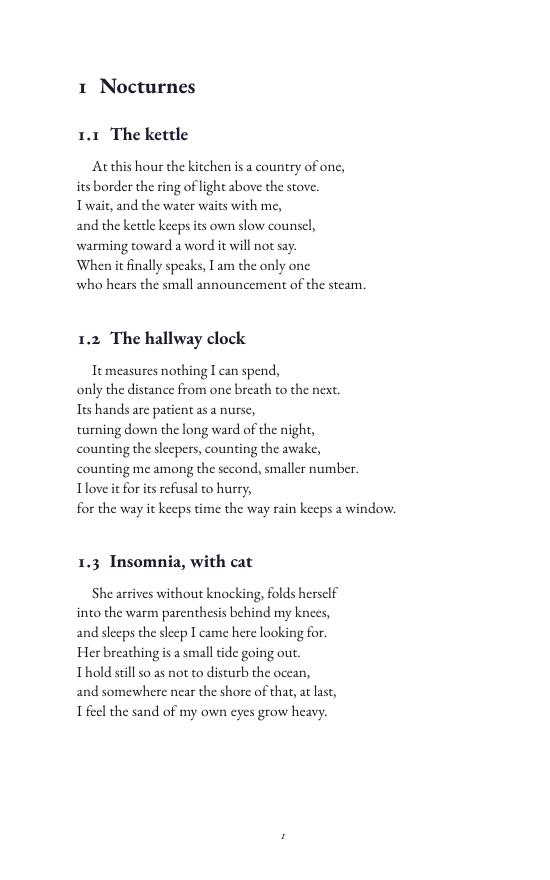
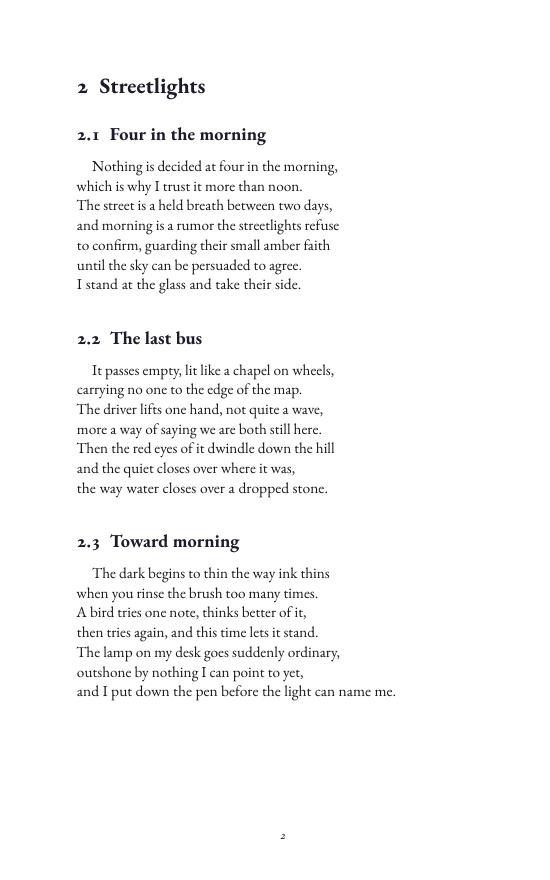
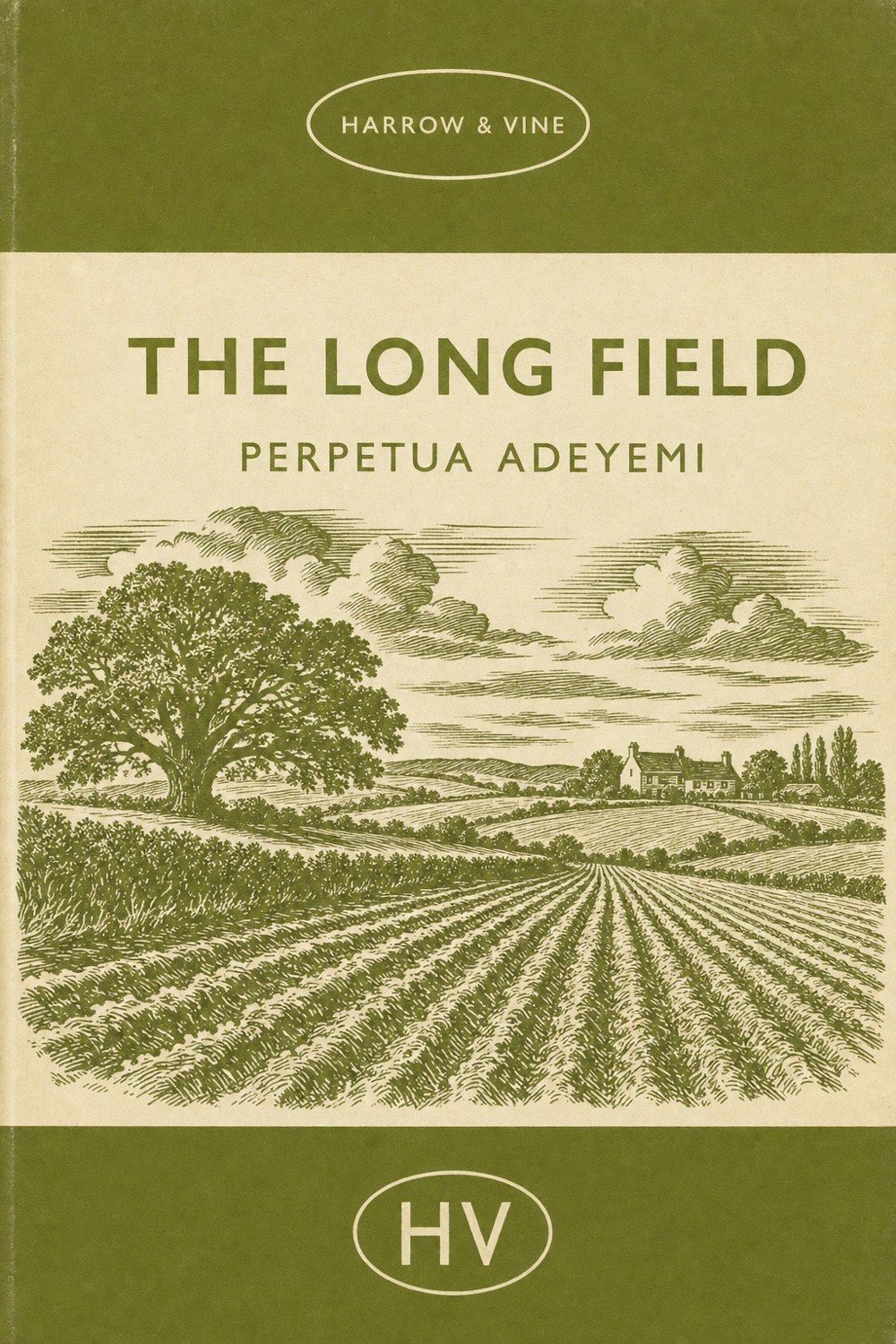
Each card below leads with the book’s cover, then
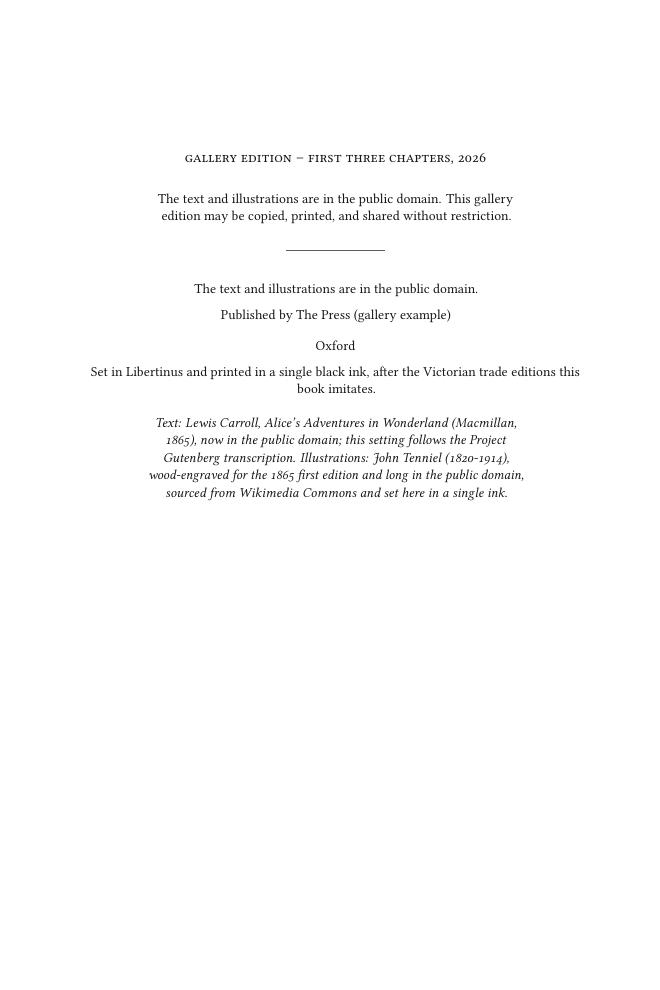
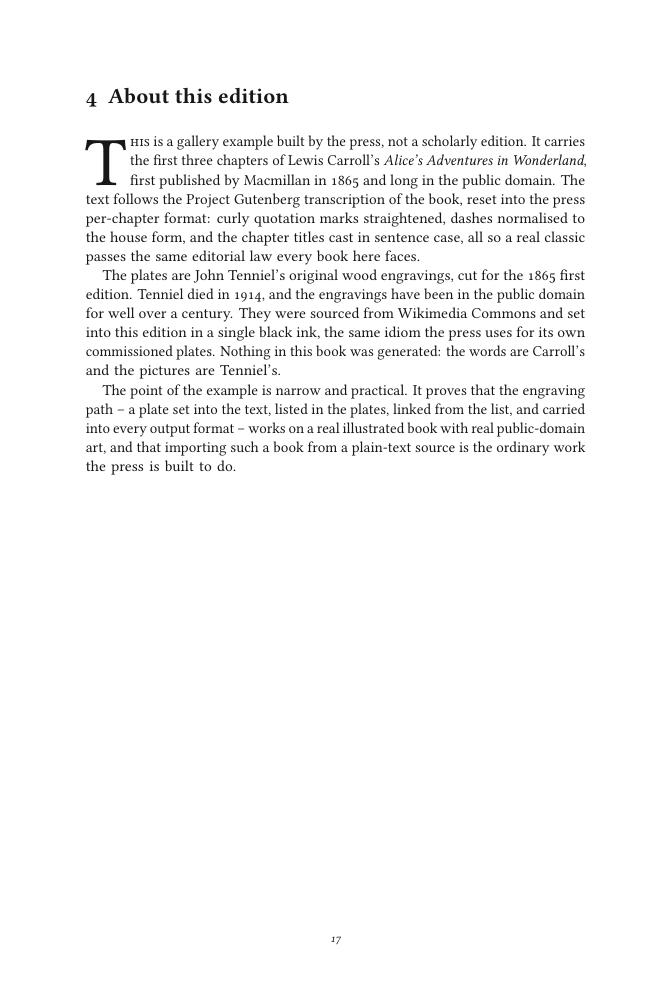
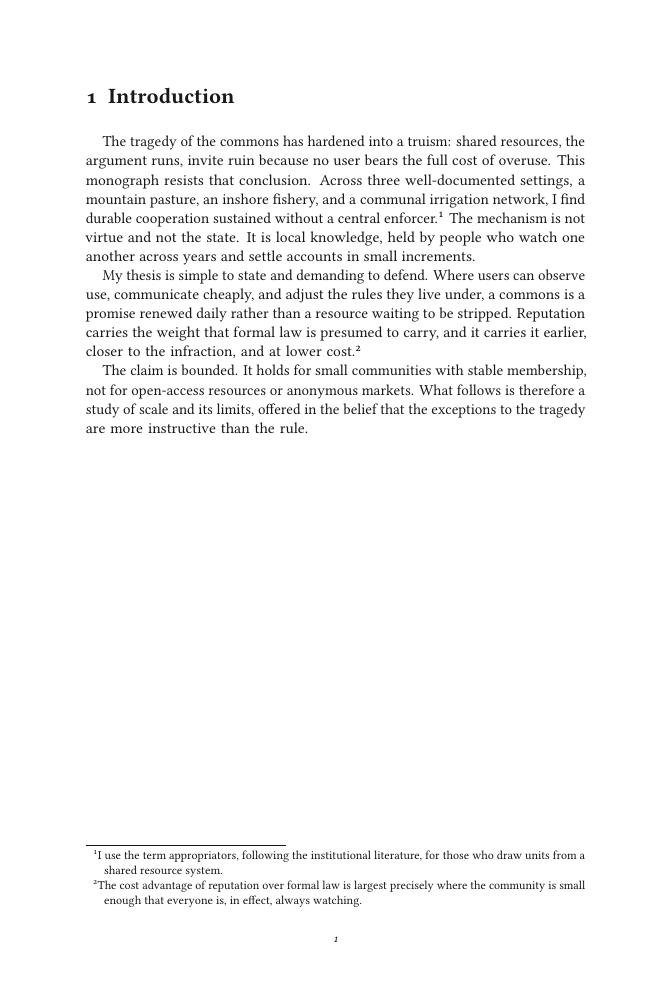
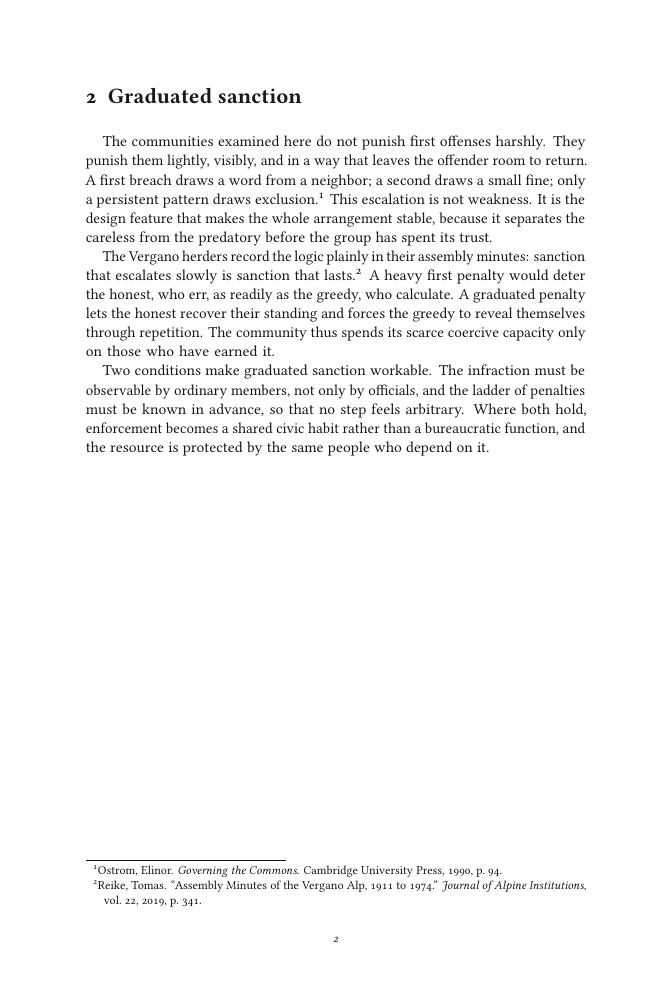
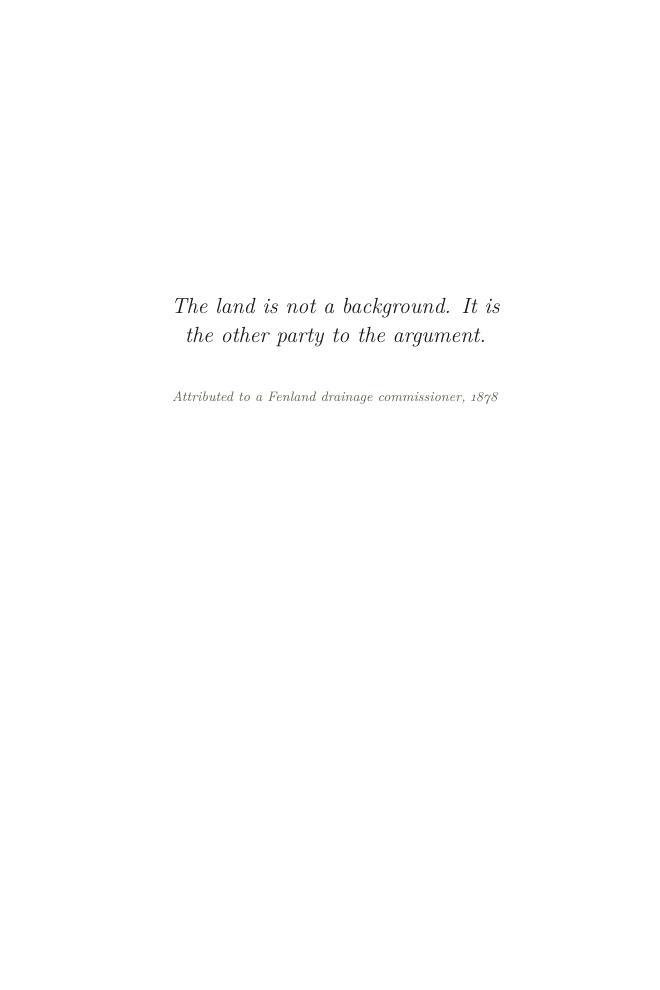
two real pages rendered from its actual PDF, built by
the same pipeline in the same toolchain. Everything else on the card —
the palette, the trim, the summary, the imprint, what the book exercises
— is read from the example’s own files when this page is built, and the
whole PDF is one click away.
A book’s interior prints in a single ink, so the two
interior pages carry one colour on their paper. The cover is where
colour and image belong: each is a Penguin-style woodcut in the book’s
own accent, on the classic tri-band grid, commissioned once and
committed as the book’s cover art. The paper, ink, and accent chips
beneath each card name the palette both are drawn from. The interior
previews regenerate from the manuscript on every build; the cover, a
one-time commission, is a fixed asset, as a real book’s would be.
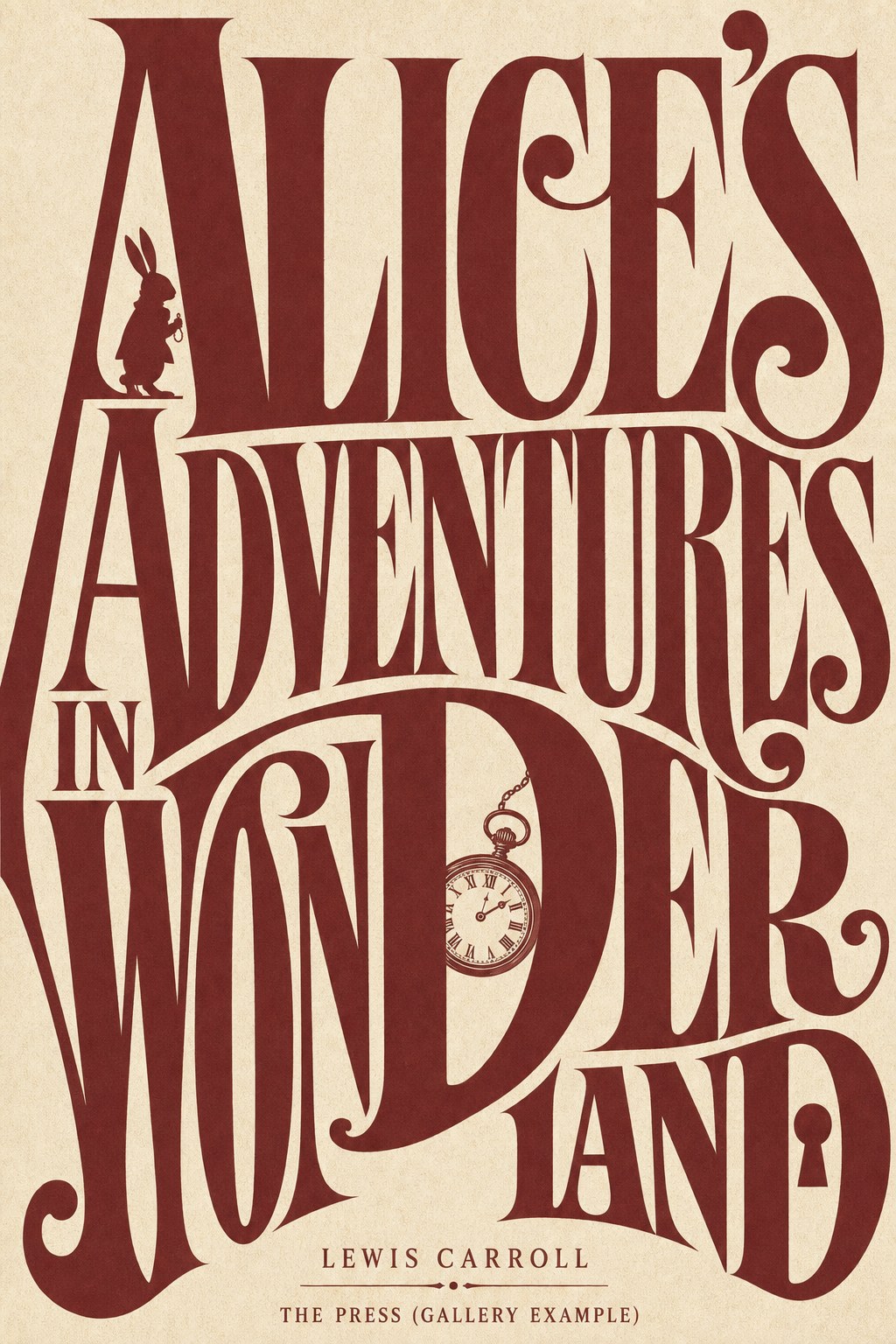
children's classics
6×9
Alice's Adventures in Wonderland
A public-domain gallery example: the first three chapters of Lewis Carroll's 1865 classic, set in the house single-ink idiom with John Tenniel's original wood-engraved plates. It exercises the engraving path end to end on real public-domain art -- nothing generated.
A Victorian children's trade edition played dead straight: the nonsense lives in the story, the page stays sober and finely cut.
- front matter
- 1 appendix
- non-default trim
- drop-cap openings
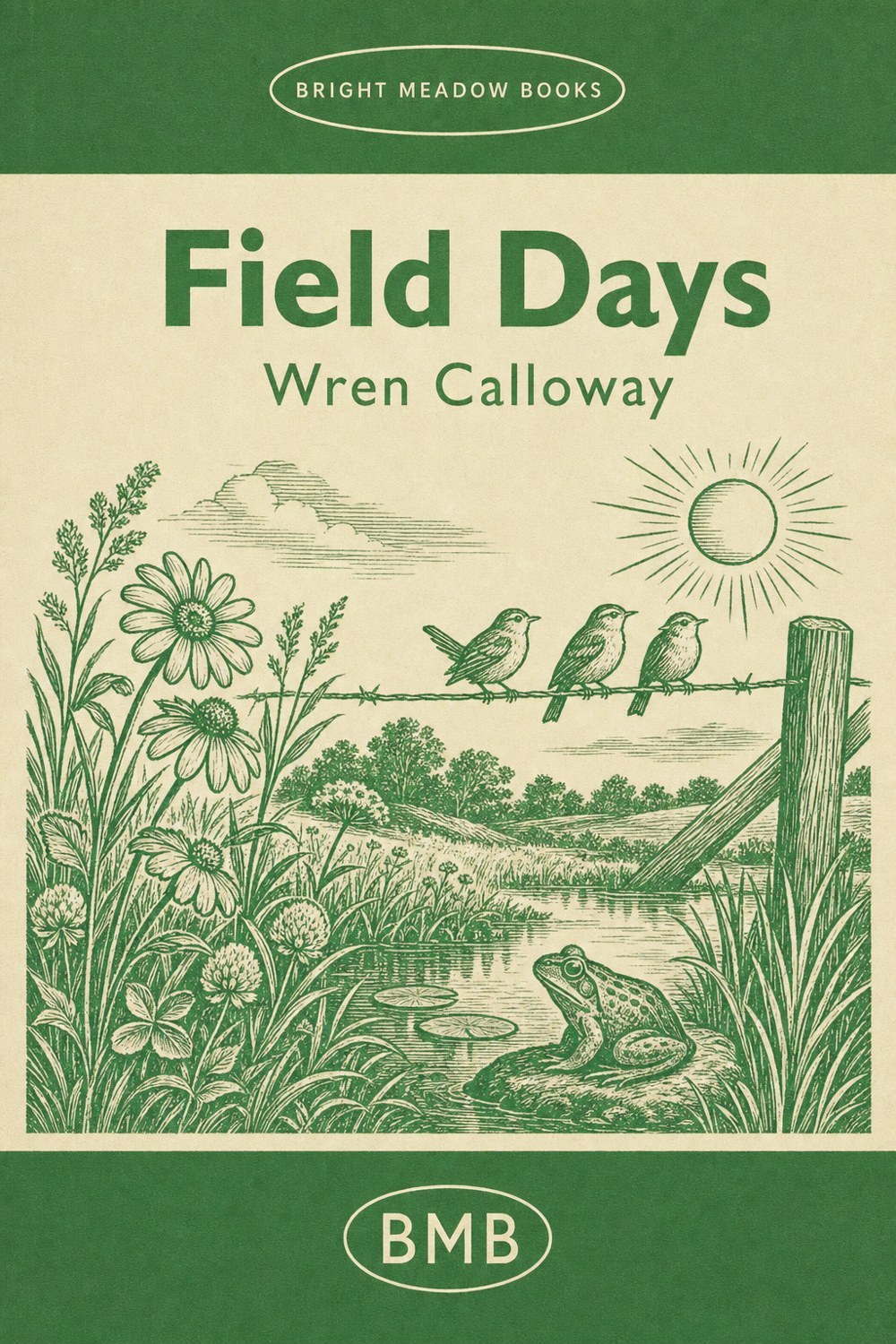
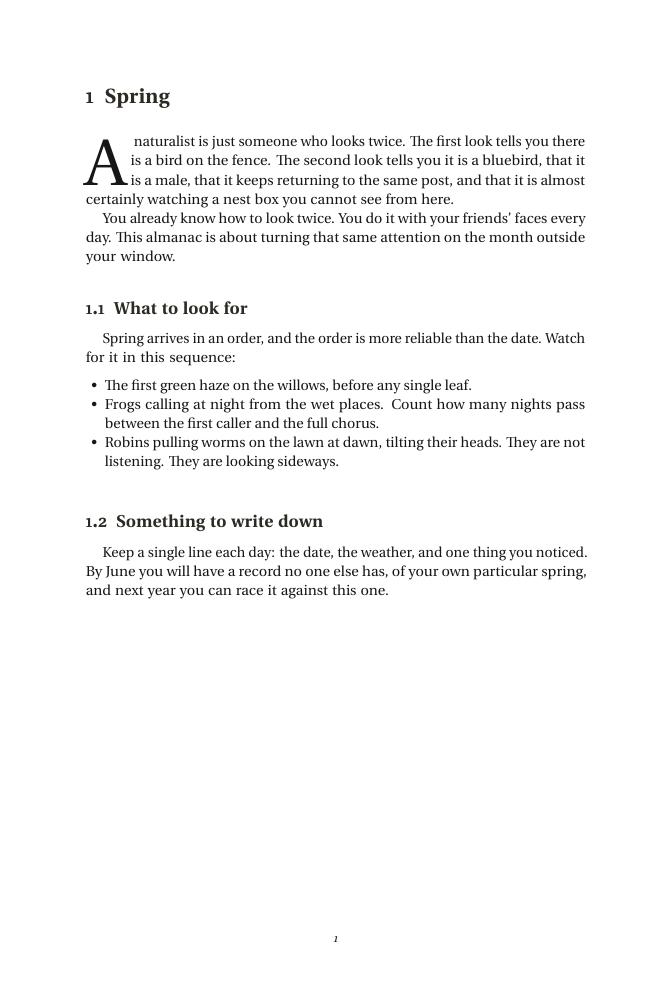
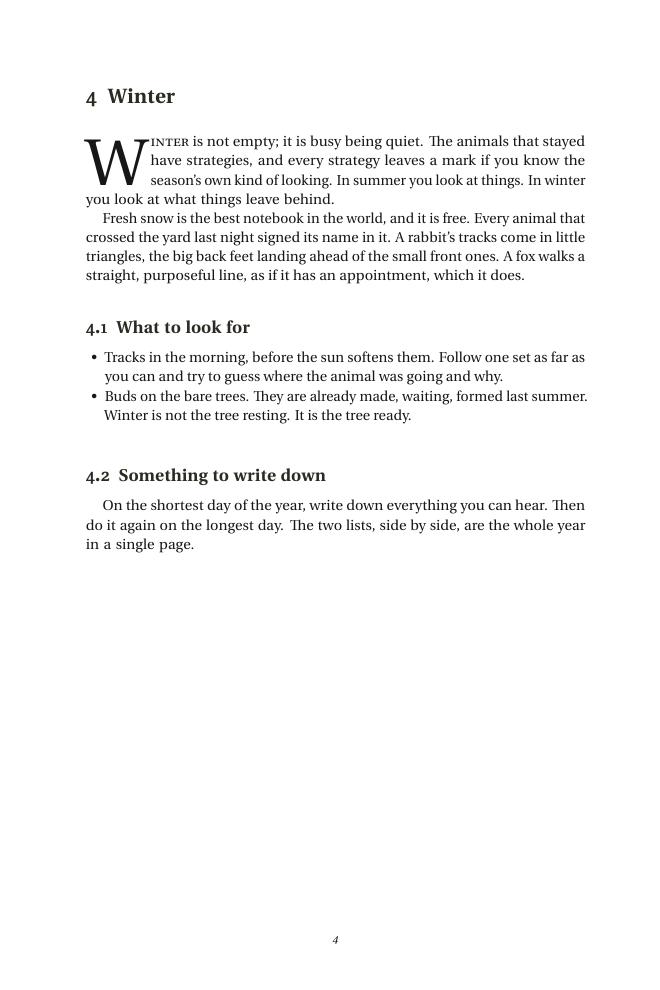
nature
6×9
Field Days
A young naturalist's almanac
A slim seasonal almanac for children who like to be outside, with a page for each month of things to look for, listen for, and write down.
Warm, direct, and curious; a grown-up who takes a child's attention seriously and never talks down.
- 1 appendix
- drop-cap openings
- saddle-stitch binding
cooking
house-6x9-color
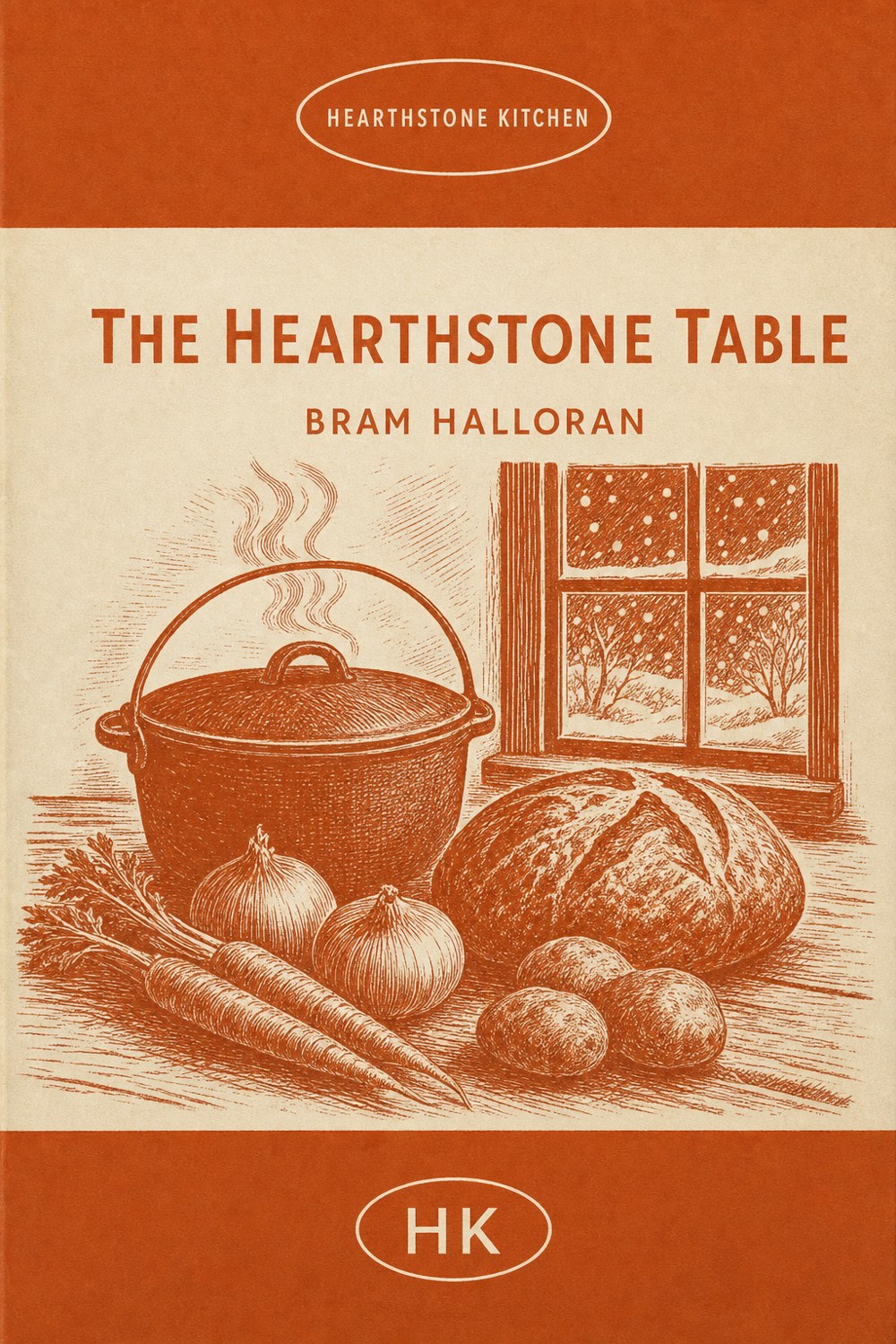
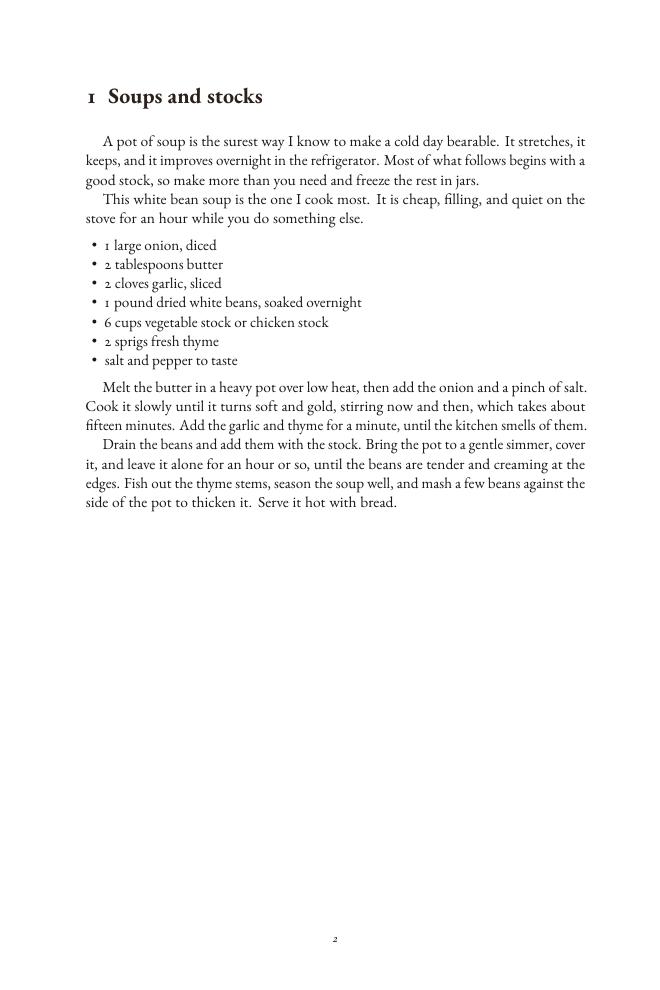
The Hearthstone Table
Plain food for cold months
A short winter cookbook of unfussy, sustaining dishes, written for a small kitchen and a cold house, with notes on what keeps and what freezes.
Warm, plain, and encouraging; the voice of a friend who wants you fed.
- front matter
- subject index
- 1 appendix
- non-default trim
political economy
6×9
The Reasonable Commons
Cooperation without coercion in small communities
A short monograph arguing that durable commons arise from local reputation and graduated sanction rather than central enforcement, read through three well-documented cases.
Measured, argued, evidential; a scholar who states the claim, weighs the case, and cites the record.
- front matter
- 1 appendix
- footnotes
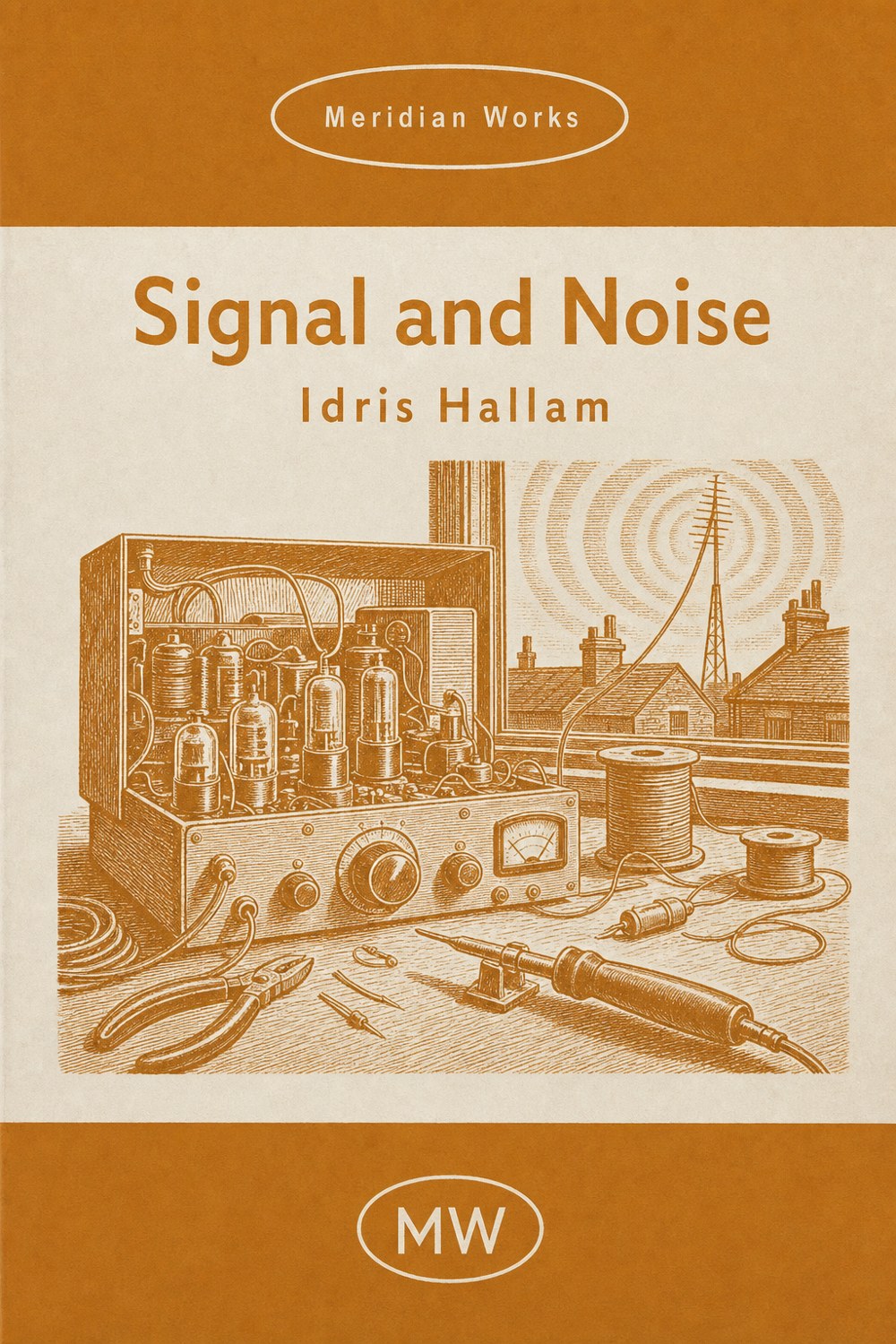
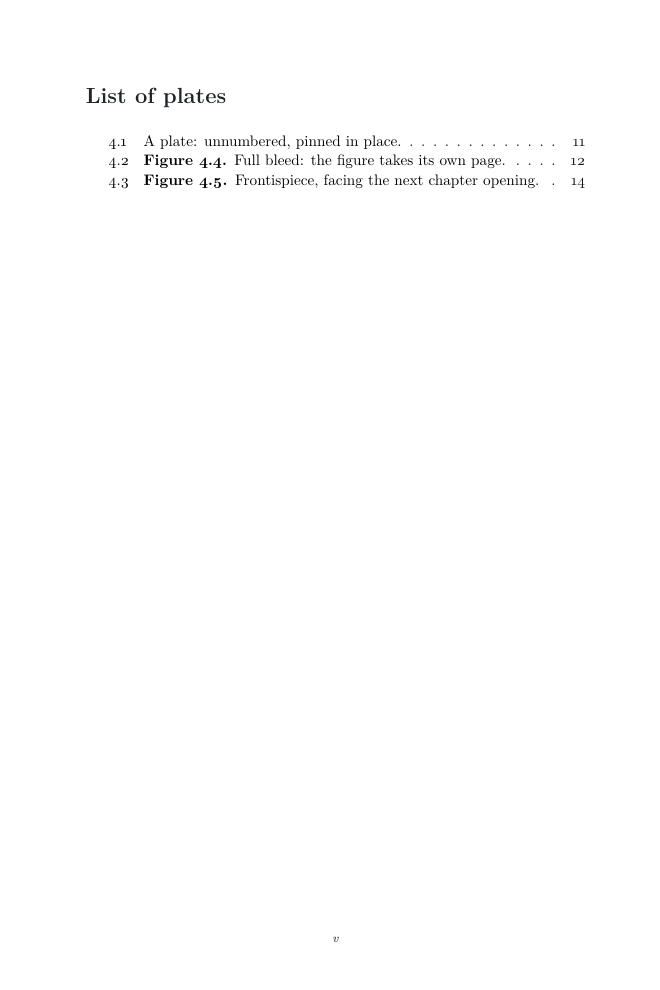
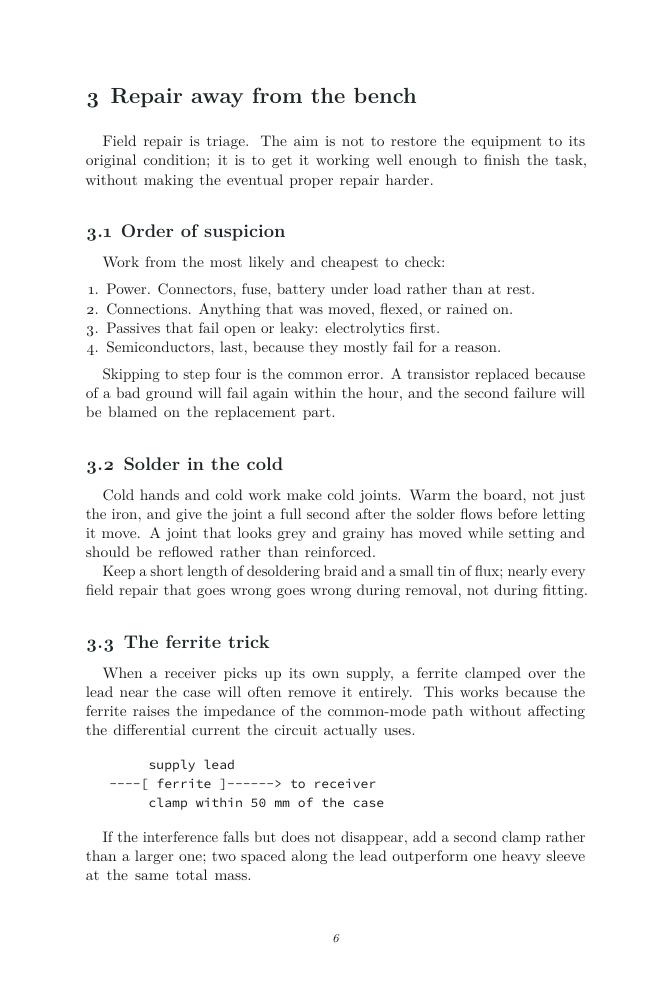
radio
6×9
Signal and Noise
A field manual for small radio
A working manual for building, tuning, and repairing low-power radio in the field, written for the operator who has a soldering iron, a meter, and no laboratory.
Exact and unadorned; an engineer who states the measurement, the tolerance, and what to do when it is out.
- subject index
- 2 appendices
- footnotes
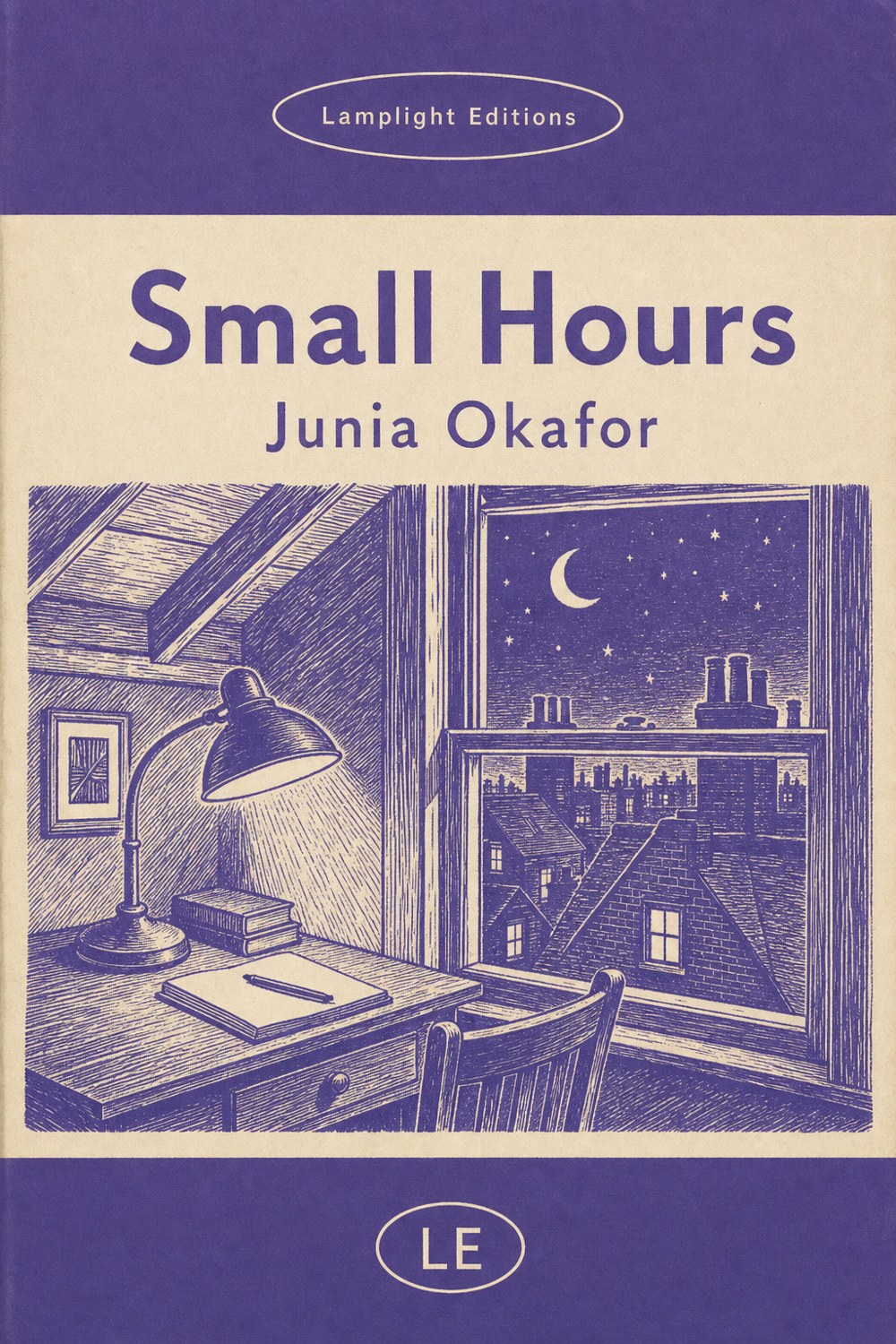
poetry
5×8
Small Hours
Poems for the middle of the night
A short chapbook of nocturnes: twenty poems written and set for the quiet hours, small enough to carry in a coat pocket.
Hushed, nocturnal, spare. A small circle of cold light in a dark room, everything softened, nothing hurried.
- front matter
- custom web CSS
- 1 appendix
- non-default trim
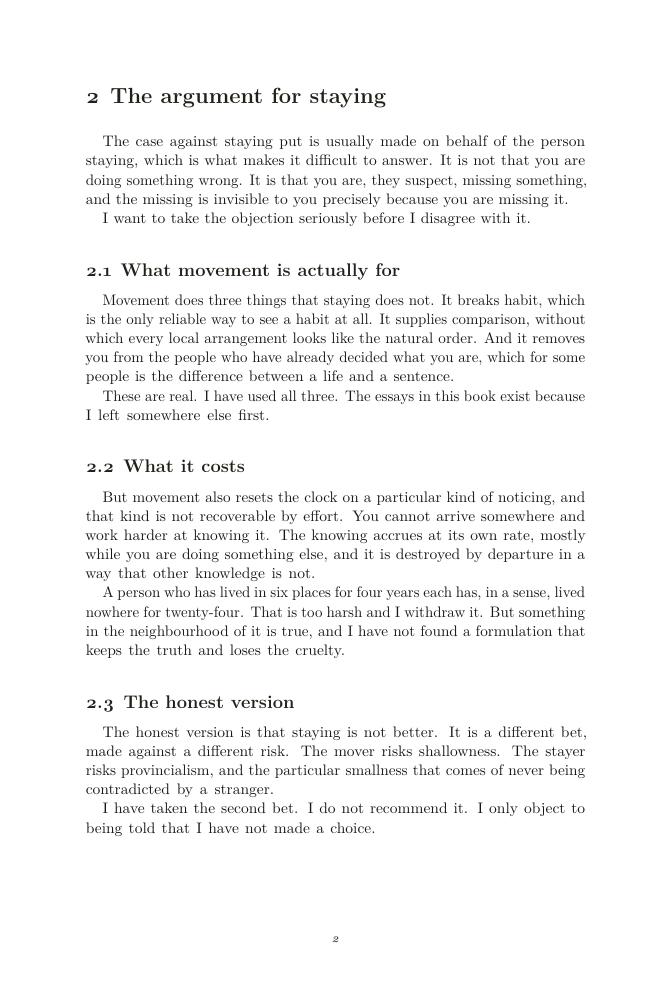
essays
6×9
The Long Field
Essays on staying put
Six essays on remaining in one place long enough to be changed by it, written against the assumption that movement is the only form of ambition.
Reflective and unhurried; a writer who circles a question, admits what she does not know, and stays with it anyway.
- front matter
- 2 appendices
- footnotes
literary fiction
5×8
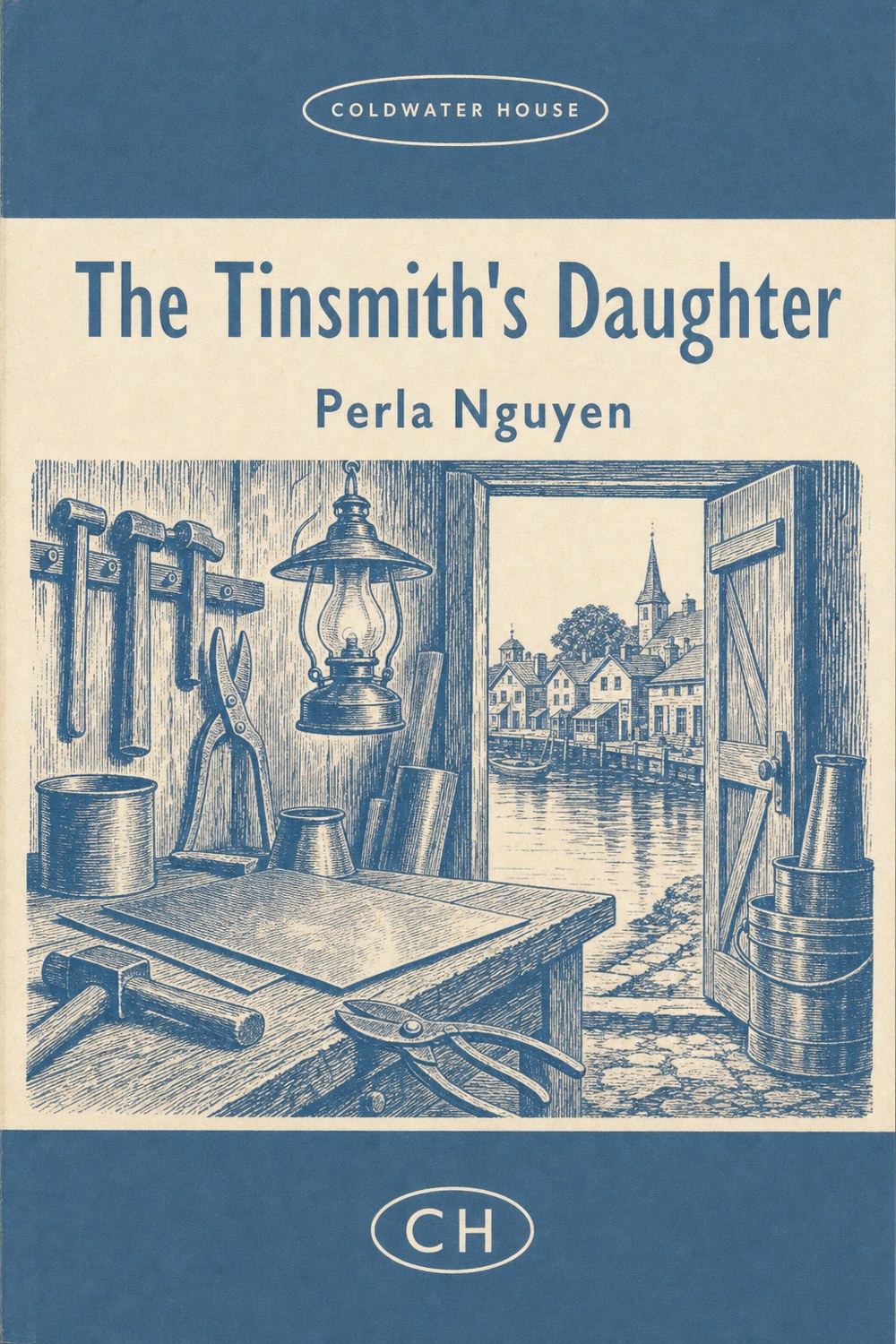
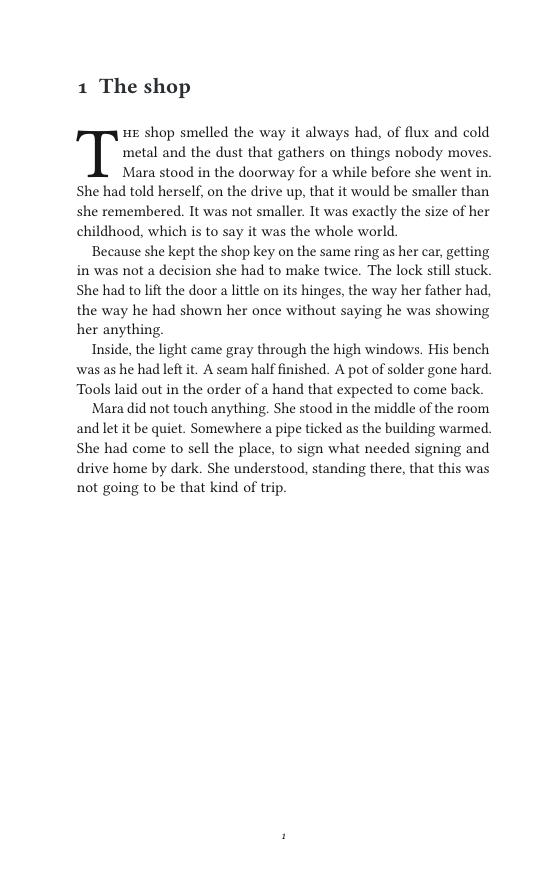
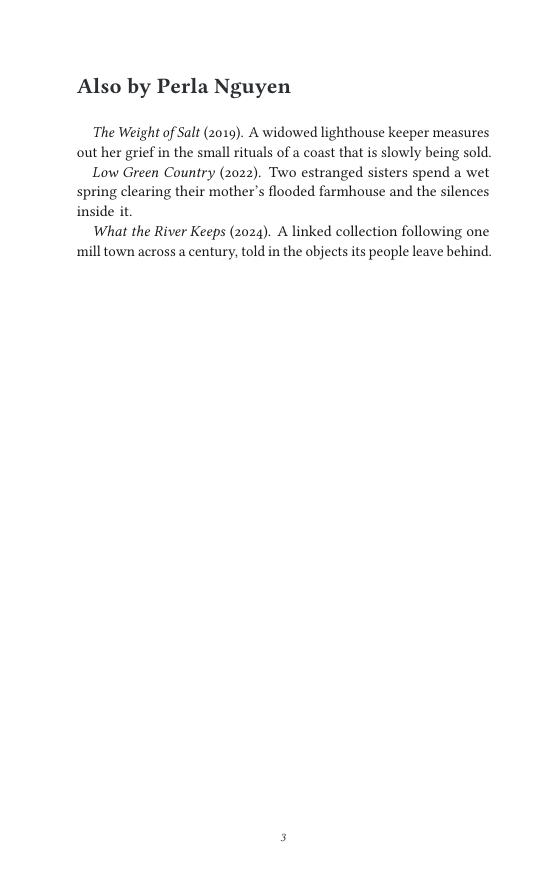
The Tinsmith's Daughter
A novella
A quiet novella about inheritance and repair: a woman returns to her late father's tin shop and learns to mend what he left unfinished.
Spare, contemporary, understated. Nothing decorative earns its place; the quiet is the design.
- front matter
- 2 appendices
- non-default trim
- drop-cap openings
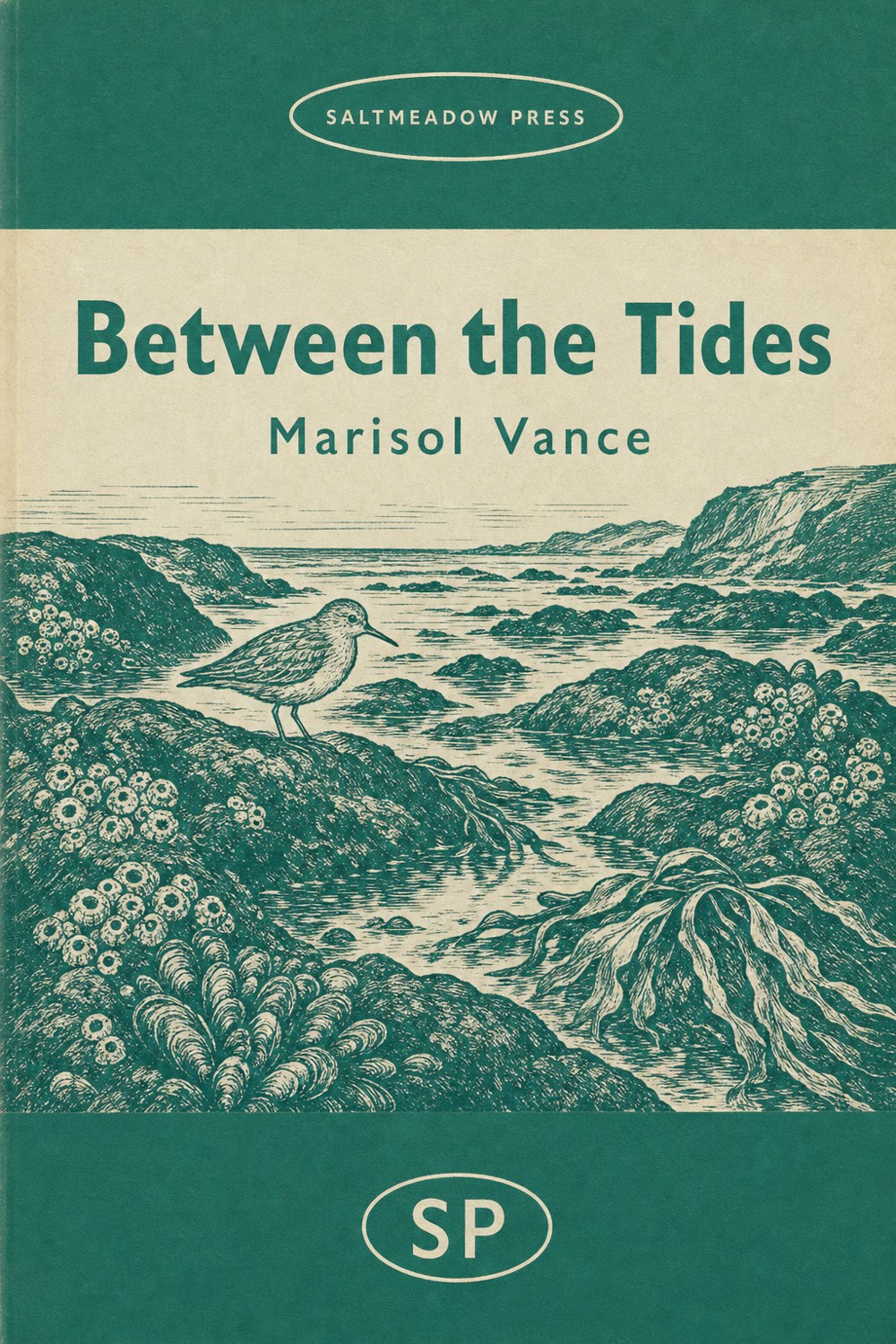
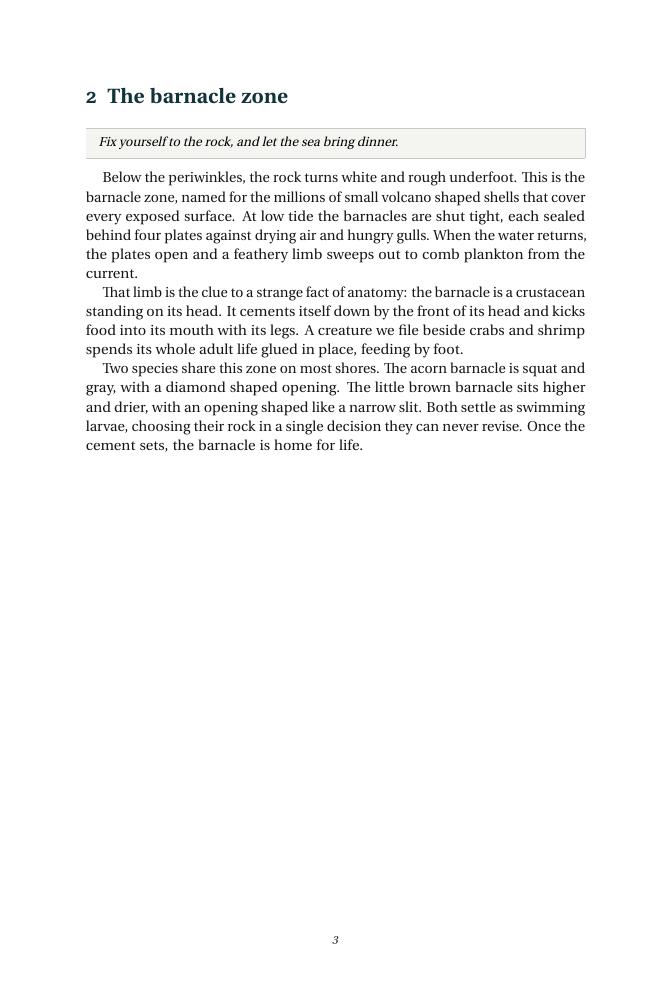
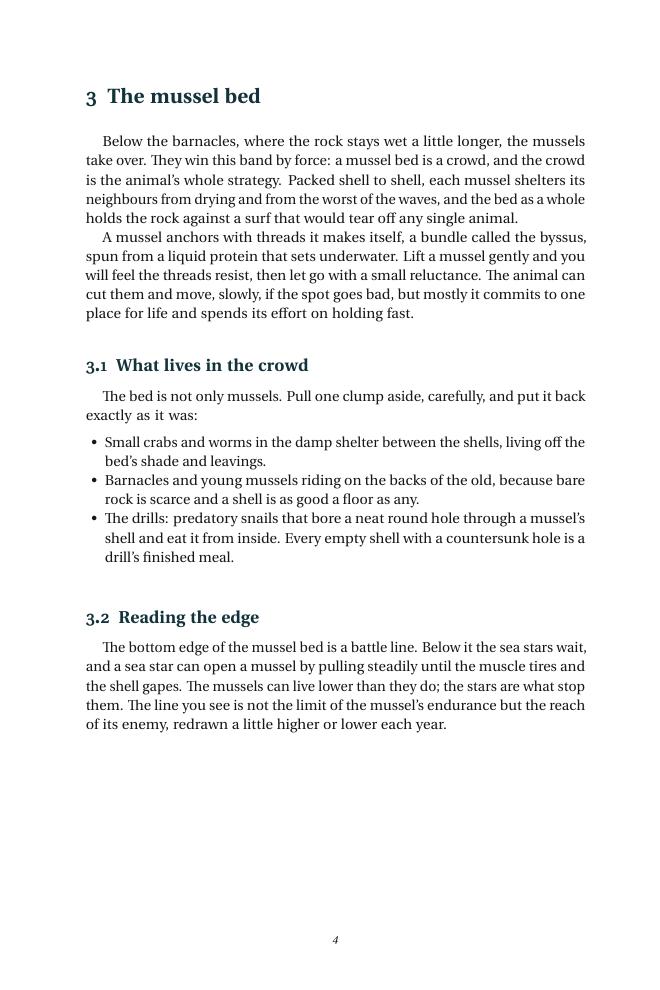
natural history
6×9
Between the Tides
A field guide to the rocky shore
A compact field guide to the animals and algae of the temperate rocky intertidal, organized by the zone where a walker actually finds them.
Plain, exact, field-ready; a naturalist's voice that names things and moves on.
What differs, and where it
lives
Every difference above is a file in the book’s own directory. Nothing
in the pipeline was touched, and no example is a special case.
| Trim |
print: profile: in
config/metadata.yaml |
the 5×8 chapbook and novella |
| Palette and register |
config/aesthetic.yaml |
every book, most visibly the cookbook against the chapbook |
| The initial that opens each chapter |
chapter-opening: in
config/metadata.yaml |
the novella and the almanac (a three-line drop cap) |
| Binding |
print: binding: in
config/metadata.yaml |
the saddle-stitched almanac |
| Dedication, epigraph, acknowledgements |
config/front-matter.yaml |
the cookbook, monograph, chapbook, essays, novella |
| A subject index |
config/index-terms.yaml |
the cookbook and the manual |
| Interior illustration plates |
plate files in assets/woodcuts/, referenced from the
chapter text |
the Alice example, which sets Tenniel’s wood engravings into the
text |
| The reading measure and web styling |
assets/web/extra.css |
the chapbook, which opens the line spacing for verse |
| An about-the-author, an also-by |
files in book/appendices/ |
every book (an also-by in the essays and the novella) |
| Citations |
Markdown footnotes in the chapter text |
the monograph, the manual, the essays, the field guide |
Build them yourself
Every example builds with the same command you would run on your own
book:
git clone https://github.com/clintecker/press && cd press
pip install -e . && cd examples/tidepool-field-notes && press all
Swap tidepool-field-notes for any other directory to
build a different book. press all runs the whole pipeline —
build, check, verify — and puts the results in that example’s
dist/.
To start your own rather than read someone else’s, the quickstart goes from an empty directory to a
verified book, and parts of a book is the
catalogue of every piece you can add. The trims come from versioned print profiles, and the full set of knobs
is in configuration.
About the art
Covers, plates, and author portraits are commissioned per book
through the art workflows and the aesthetic each example declares. Most
examples build and validate without generated images, and degrade
gracefully where art is absent — which is why the cards above are
typographic rather than photographic. The one exception is the Alice
example, which carries real, public-domain art: John Tenniel’s 1865 wood
engravings, set into the text in a single ink to exercise the engraving
path end to end. Nothing in the gallery is generated art passed off as a
real book’s — a commission is committed as a fixed asset, and a
public-domain plate is attributed as such in the colophon.