6 Imposition
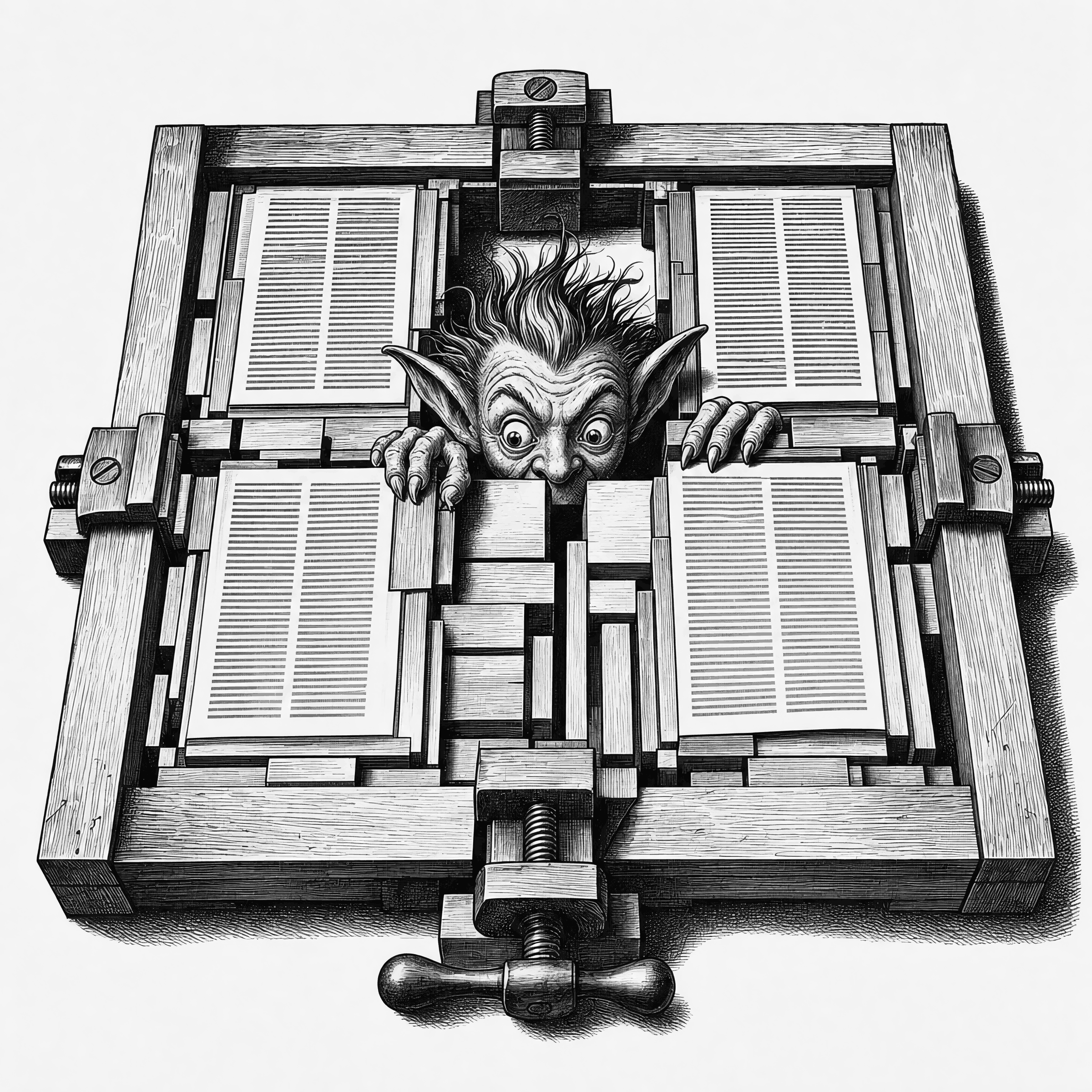
Imposition is the step where the compositor stops thinking in pages and starts thinking in sheets. Eight pages of set type go onto the imposing stone for one side of an octavo sheet, and the arrangement looks like a mistake: the first page beside the last, half of them upside down, nothing in reading order. The scheme is correct when the printed sheet, folded in half three times, yields a gathering of sixteen pages that read in sequence with every head at the top. The compositor locks the pages in the chase with furniture and quoins, lifts the forme, and sends it to press.
The trouble with imposition is that its errors are invisible where they are made. Every page on the stone can be perfect, the proofs clean, the ink even. The error lives in the relationships between pages, and those appear only after the sheet is printed, folded, gathered, sewn, and trimmed. A careful shop catches a transposed page when it reads the imposition off the proof; a careless one meets it in the bindery, with the edition already through the press.
We impose too. The devil sets clean pages all day, and each one proofs fine alone. What folds them into a book is machinery: the layout engine that places the plates, the passes of the run that build the front matter and the lists, the link tables that carry a reader from a reference to its target. Errors made there have the old property. Nothing complains at the stone. The book comes out whole with the fault bound in.
Three wounds from this shop.
A new machine came in with one face missing, the one used for keyboard text. Nothing stood in for it. Every character set in that face simply vanished from the printed page, with no warning and no substitute. A compositor who ran a box empty at least knew he had, and stopped, or set a turned letter as a placeholder that printed as a black mark until the right sort came.1 This press kept printing, and the run finished green. The only witness was the proof: lines with holes where words should have stood.
The list of plates was built by the run itself, from notes the machinery takes as it places each figure. The notes from one pass feed the list on the next, so the list needs several passes to converge. Run once, the build reported success and the list printed empty, a heading with nothing under it. Every individual page was correct. Only a reader turning to the front matter would ever know.
The links in that list anchored at the captions rather than at the plates. A caption sits below its figure, and when the figure fills a page, the caption falls at the top of the next one. So every link delivered the reader one page past the picture. Follow the entry for the fourth plate and you land on the blank verso after it. All the links worked. Every one was wrong by one page.
None of the three raised an error. The machinery did what it was told, at full competence, and the defect belonged to the finished object. You found it by opening the bound proof and looking.
The practice: each wound becomes a rule, and the rule is built into the frame where the work happens, not written in a note.
So the missing face became a law of the rebuild. The full fount list is written into the instructions that raise a new machine, and the proof hunts one sentinel character from each face in the finished pages. A note in the shop manual would not have done it. The devil raising a press at midnight has not read the manual, and neither have you, at midnight.
The empty list became a pass count the run performs. The run repeats until the lists converge, and it will not hand over a book from a single pass. Nobody remembers to run it again; the run remembers.
The wandering links became a step in the proofing. After every impression, the proof follows each entry in the list of plates and checks it against the page that really holds the picture. The check takes seconds. When a link overshoots, the run fails loudly and the shop stops.
The second practice follows from the first: the scheme is pinned. A book imposed today must impose identically tomorrow, same faces, same measures, same folded result from the same set pages. If the margins creep because some component updated under you, or a face substitutes silently on a new machine, the book has changed and nobody chose the change. Drift in imposition shows up bound. In software you know it by its plain names: the toolchain nobody pinned, the dependency that updates itself overnight, the build that differs between two machines.
So pin everything the fold depends on. The faces travel with the shop. The tools are named by version. The scheme lives in one place, and the run reads it rather than remembering it. When you want a wider measure or a new face, you change the pinned scheme deliberately, and the change is a new edition, dated and recorded, its proofs opened and read before it ships. In the old shop a forme once locked stayed locked, and standing type could reprint a title years later, line for line. Your shop can make the same promise.