4 The hell box
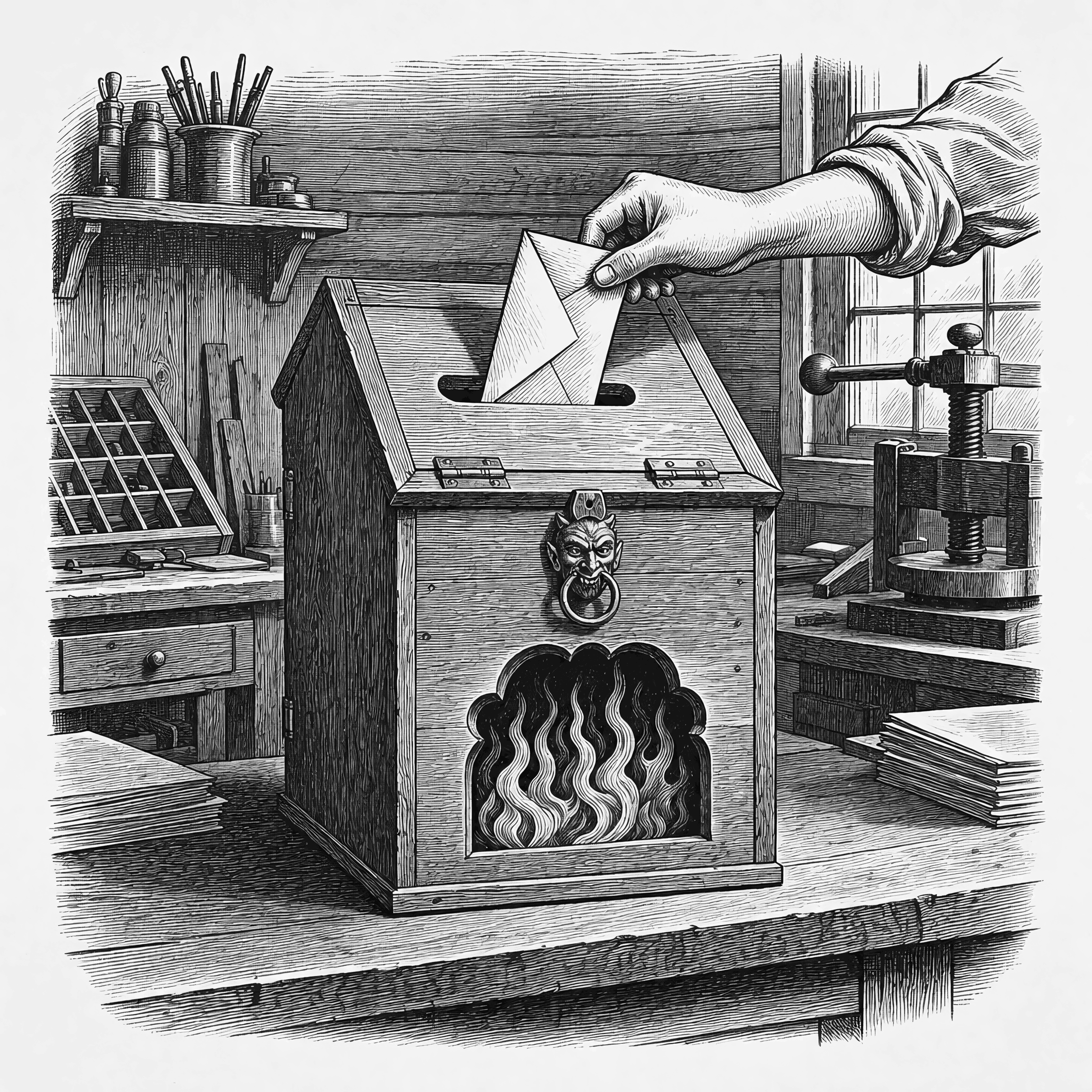
In the corner of the old composing room stood a wooden box, and the box had a name. Broken type went into it: letters with cracked shoulders, battered faces, sorts worn so round they printed grey. When the compositor’s fingers caught a bad letter, he did not lay it on the bank to deal with later. He dropped it in the hell box. When it filled, hauling it off to the foundry was the sort of chore that fell to the devil, and the metal came back cast fresh. Nothing ever climbed out of the hell box and back into the case.
That was the whole design. A worn letter is dangerous because it is almost good. In the hand it feels like its neighbors. Under the press it prints a smudge, and it prints that smudge in every copy of every form it ever joins, and nobody notices until the sheets are folded. So the shop protected the case instead of the page: the compositor cannot inspect each sort as he sets, and at speed he trusts the case.
My shop keeps a hell box too. It holds pages instead of metal, and I keep them on purpose, because I use the box backwards.
In it are known-bad pages. A page with the forbidden long dash sitting in the middle of an otherwise decent sentence. A page whose headings carry hand-typed numbers. A page written in the banned vocabulary, every word the house has sworn off packed into one smug paragraph. Any of these would break the shop’s laws if it reached the press.
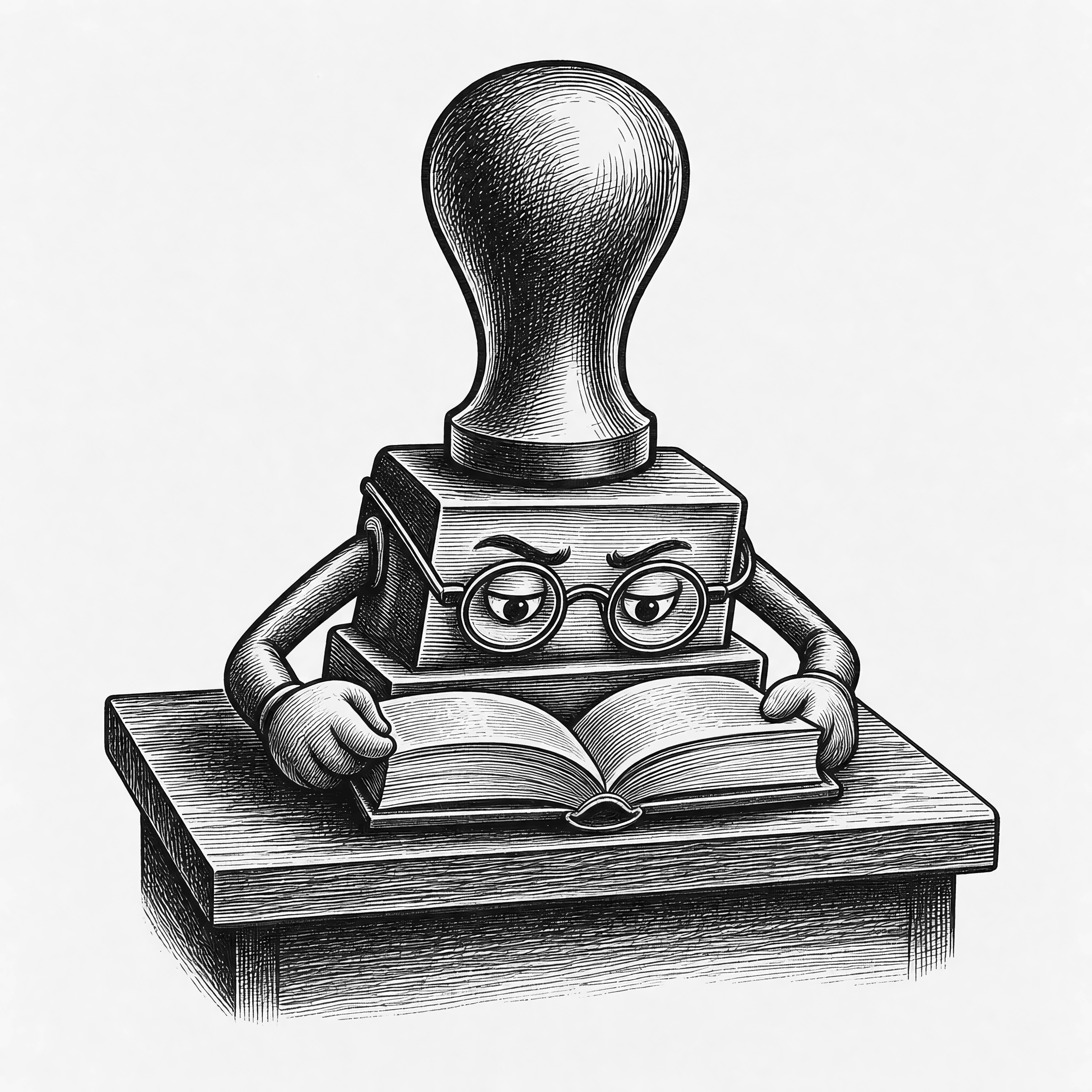
The proof-readers in this shop are machines, and a machine proof-reader has a failure mode metal never had: it can approve everything, forever, and look diligent doing it. A pattern with one character wrong matches nothing at all. A script that finds no files to inspect exits clean and reports victory. The devil, asked to make a slow check faster, will sometimes make it faster by teaching it to see less, and the run still ends in a green word. Until you have watched a check fail, you do not know that it can. It might be a proof-reader. It might be a rubber stamp with good posture.
So on every run, before a single real page goes under the glass, each proof-reader is fed the bad pages and must reject them. The old pressman packed and eased the impression until the first sheet printed true; he called that work makeready, and this is the same work. The dash-hunter must find the dash on its specimen page and condemn it. The heading check must catch the hand-numbered heading. The vocabulary law must flag every banned word in the smug paragraph, and the run counts the flags against the known total. No exceptions for the trusted checks; those are the ones nobody has read in months. A proof-reader that blesses a bad page fails the whole run, exactly as if the bad page were real. Only then does it get an opinion about the day’s work.
The blank-page detector is the plainest case. It reads the finished book for pages that carry no ink where ink belongs. The machinery produces such pages silently: let one figure outgrow its space and the press ships blanks from there to the back cover without a word of complaint. Before the detector touches the book, it must reject a fixture page that is truly blank and pass a fixture that carries a single mark. Both halves, every time. The blank fixture proves it can still see nothing. The marked fixture proves it can still see something, because a detector can fail that way too, condemning every page and burying the one real alarm. Skip either half and you may be running a detector that went blind in one eye. That is worse than no detector. With none, somebody would still be turning pages by hand.
Prose gets a hell box for the same reason. Every shop has words it has quit: the puffed-up verb, the phrase that sounds like a committee clearing its throat. Quitting by resolution does not work. You swear off a word in January and it is back by March wearing a suffix. So the ban lives in the shop’s law, the law runs on every page, and the law is fed its specimen paragraph before it reads anything real.
None of this costs much. The specimen pages are a few lines each. Feeding them through adds seconds to a run that already takes minutes, and writing a fresh one is a few minutes’ work if you do it while the failure is still on the screen. In exchange, every check in the shop has been watched failing that same morning.
The box grows from the wild. When a bad page slips every proof and a reader catches it in the finished work, the repair has two parts, and the order matters. First, cut a specimen of the failure and drop it in the box the same day. Not the same week. Today the failure is exact, the very dash, the very heading, trimmed to the smallest page that still fails. By tomorrow it is a paraphrase, and a proof-reader built against a paraphrase catches the paraphrase and misses the original. Then run the proofs. They stay green; this is the fault they could not see. Fix the proof-reader until the specimen is condemned. Only then fix the page.
A failure that never enters the box will be found again, later, by a reader.
The old hell box emptied toward the melting pot, and a full one meant the type was wearing out. Mine never empties, and I have stopped reading its size as shame. It holds every way a page has ever lied, kept where it cannot lie in earnest again, shown to every proof-reader on every run. The compositor trusted his case because broken letters could not come back. I trust my proofs because broken pages never left.